

Barring a sudden and drastic personnel change, the Detroit Pistons will enter the 2026-27 season with a familiar flaw. Beyond Cade Cunningham, Detroit is thin on shot creators—particularly along the perimeter. That's created the potential for Cunningham to be overburdened once again.
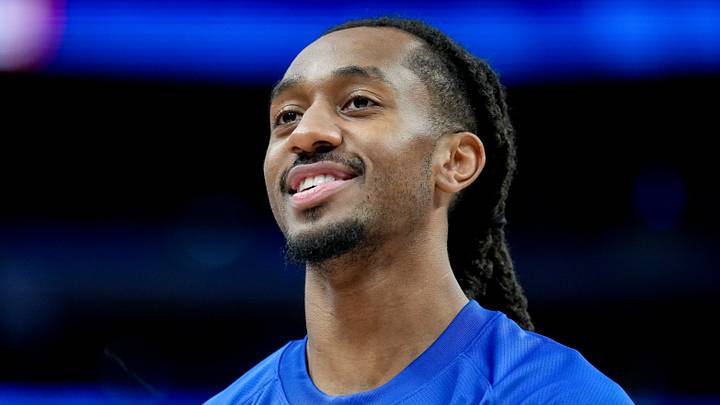
If the Pistons are trusting their current players to resolve that issue, then it's Daniss Jenkins who represents their most realistic source of a resolution.
Jenkins, 25, was arguably the most reliable offensive guard on the Pistons' roster after Cunningham in 2025-26. He ranked second on the team in assists per game at 3.9, as well as assists per 36 minutes at 6.9. He was also second on Detroit in drives per game at 7.5.
Translate that average to 13.3 drives per 36 minutes and it becomes abundantly clear how important Jenkins could be to a team that ranked No. 22 in the category despite Cunningham ranking No. 5 individually.
The hurdle for Jenkins is becoming more efficient in said scenarios. Though he consistently created penetration, he shot 38.5 percent on drives. He also averaged 0.85 points per isolation possession, which isn't quite where the Pistons' No. 2 perimeter shot creator needs to be.
Thankfully, Jenkins has just 79 games of NBA experience under his belt and is thus a likely candidate to improve if he puts the work in. Detroit will need him to do so.
Daniss Jenkins is Pistons' most realistic source of shot creation help
Jenkins is in something of a position battle with rookie Ebuka Okorie, but there should be enough touches and minutes to go around. He also has the clear advantage of NBA experience, brief as it may be, to potentially give him the edge if there truly are limited chances to go around.
Assuming Jenkins receives the opportunities his talent level suggests he should, the Pistons should trust him to help run the offense and play both in support of and alongside Cunningham.
As a potential sixth man, Jenkins' ability to get downhill and create for himself and others could make him the North Star for the second unit. He can put pressure on opposing defenses with his handle and ensure that the Pistons aren't struggling to score when Cunningham rests.
Along those same lines, Jenkins shot 37.4 percent from beyond the arc, as well as a blistering 45.6 percent on catch-and-shoot threes, in 2025-26. He should thus be able to play next to Cunningham.
Question marks still exist, particularly in regard to Jenkins' thin 165-pound frame and whether or not he can add enough strength to defend adequately or fight off contact on the drive. If the Pistons see the necessary growth, however, they could have the long-term option at the 2-spot that they need.
Perhaps another player will surprise the Pistons and emerge as a legitimate shot creator, but for the time being, the most productive slasher and playmaker on the roster after Cunningham is the safe bet.
 Add us as a preferred source on Google