

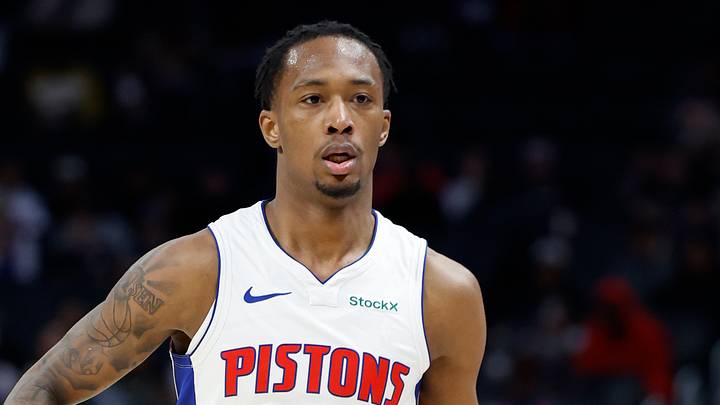
NBA teams aren’t being nearly as patient with top prospects in recent years, and the Pistons and Ron Holland hope it’s a trend they avoid.
The most recent example was Rob Dillingham, former 8th pick in the 2024 draft, who bounced around to multiple teams before his third season in the league, and now finds himself without a job. He was drafted to a good team that is trying to win now and didn’t have endless minutes to let Dillingham cut his teeth. There have been some great pieces written about this, so I won’t belabor the point.
Zaccharie Risacher was the 1st overall pick in the same draft, and he too has already been relocated after a clunky start to his career.
Ron Holland may find himself in the same boat with the Pistons if he doesn’t establish himself in his third season. The Pistons have a looming decision about his next team option, which jumps to $11.5 million, which would be risky given what we’ve seen so far.
It’s a risk many teams will be unwilling to take on unproven young players.
NBA teams have to be more risk averse in the tax apron era
With all of these players, including Holland, it's less about belief in their talent and more about the second contract, which teams are going to increasingly avoid paying if the guy hasn’t proven himself.
In the past, these were contracts that were practically rubber stamped, as teams felt it was worth the financial risk, but now, teams are looking for cheap impact, not guys who might live up to a contract or might not.
Holland is a perfect example, as the Pistons may be able to find a player in next year’s draft who makes a similar impact as Holland, and that player will be doing it on a rookie deal that won’t be as high as Holland’s as a top five pick.
They could also turn to a guy like Javonte Green, who is consistent on a fraction of the salary Holland is on now.
I think we’ll see teams increasingly cycle younger players and minimum veterans onto the roster in an effort to control costs, which is going to make it tougher for third and fourth year players to get their second contract, and we’re seeing the same for middle-of-the-road veterans in the same salary range.
Holland is going to get a chance to prove himself, but the Pistons may eventually decide that his potential doesn’t warrant an $11.5 million salary. It’s a cutthroat business and getting even more so for project players who are being given less and less time to develop.
 Add us as a preferred source on Google