

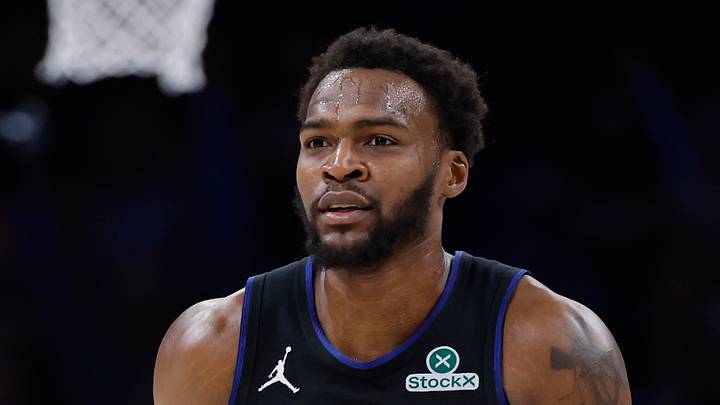
Whether or not Jalen Duren re-signs, the Detroit Pistons have placed Paul Reed directly under the spotlight. A fan favorite whose energy, intensity, and skill have caused many to call for a larger role for him, Reed will have exactly that after the Pistons traded Isaiah Stewart to the Memphis Grizzlies.
In order for Detroit to justify its decision to trade one of the best defensive players in the NBA, Reed must answer a pivotal question: Can he scale his impact to a larger role?
Reed's numbers look sensational when one extrapolates the data and applies the per-36 metric. In 2025-26, he averaged 20.1 points, 11.7 rebounds, 5.2 offensive boards, 3.2 assists, 2.4 blocks, and 2.3 steals per 36 minutes on .617/.325/.664 shooting.
For perspective: Reed was the only player in the NBA who averaged at least 2.0 blocks and 2.0 steals per 36 minutes, as well as the only player who averaged at least 20.0 points and 5.0 offensive rebounds per 36 minutes.
With a legitimately elite statistical profile from a per-36 perspective, Reed receiving more minutes seems not only justified, but necessary. In saying that, he played just 13.9 minutes per game in 2025-26. No matter how appealing his statistics may be, there's simply no way around how different his role will be in 2026-27.
With or without Duren, Reed is going to have to prove that he can offer high-level defensive play and offensive value if the Pistons are going to justify trading a top-tier backup center.
Can Paul Reed translate success to a significantly larger role?
Stewart finished the 2025-26 season ranked in the 98th percentile in rim protection and the 88th percentile in rim deterrence, per Basketball Index. He was No. 2 in the NBA in rim disruption. Stewart also ranked in the 99th percentile in screner mobile defense and the 94th percentile in screener rim defense.
In other words: The Pistons are trusting Reed to replace a player who ranked among the very best rim defenders and pick-and-roll disruptors in the NBA.
The good news is that Reed was going all but step for step with Stewart in most of those areas. He ranked in the 95th percentile in rim protection, the 97th percentile in rim disruption, the 96th percentile in screener mobile defense, and the 91st percentile in screener rim defense.
There's simply no way around how playing 13.9 minutes per game simply isn't the same as taking on 20-plus on a regular basis—particularly when one factors in the challenge of sustaining the energy Reed plays with across longer spells on the court.
This isn't to say that he's incapable of doing so, but instead acknowledging the challenges that lie ahead. He'll need to learn to pace himself through games as his minutes increase, all the while facing a different level of expectations from internal and external sources. To put it plainly: Reed is in store for an NBA experience unlike any he's had before.
If the Pistons are thus going to be able to justify trading Stewart, then Reed will need to prove he can scale his impact to a larger role without compromising what made him special in fewer minutes.
 Add us as a preferred source on Google