

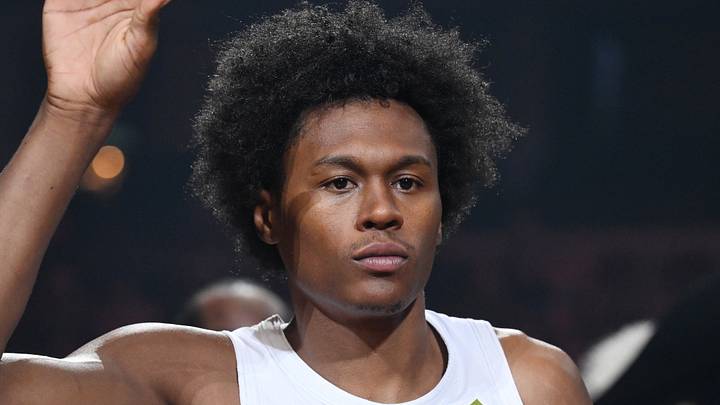
Sometimes in the NBA, it’s the trades you don’t make that make all the difference.
The Detroit Pistons didn’t make the splashy move that everyone was expecting last offseason but instead took care of their own in-house business and added role players who could shoot.
Meanwhile, other teams in the Eastern Conference were making power moves that were supposed to catapult them ahead of the Pistons, which hasn't been the case so far, as Detroit has jumped out to a 6-1 start.
One of those teams was the Cleveland Cavaliers, the team that beat the Pistons in the playoffs last season, and added wing Peyton Watson over the summer.
Watson was a restricted free agent that everyone knew Denver was not going to bring back, and he was briefly attached to the Pistons in rumors.
Instead, the Cavaliers gave up Max Strus (who killed the Pistons in the playoffs and was one of the big reasons Cleveland won) and an unprotected first round pick for Watson, before promptly giving him a massive $88 million contract.
Watson is an exciting player, but he had some major red flags, and it’s getting clearer that the Pistons made the right call to not pursue him.
The Pistons can’t reach in a trade
The Cavaliers are desperately trying to win RIGHT NOW, so they aren’t worried about the future, and were comfortable overpaying for a player who has not done much in his career.
In Watson’s breakout season last year, he only played 54 games, and his numbers were buoyed by one hot shooting streak in the season and pedestrian otherwise. But his defense and shooting splits were enough to make Cleveland think he could be the wing of the future.
So far that hasn’t been the case, as Watson is averaging four fewer points per game than he did last season, and shooting a wretched 37 percent from the floor and 16 percent from 3-point range.
It’s still very early in the season obviously, so Watson has plenty of time to turn things around, but he’s already on the injured list and expected to miss Cleveland’s game tonight with a hamstring injury.
My biggest reason for wanting no part of Watson is that the Pistons have a similar player in Ron Holland, who has had a better start to the season after a mini-hot streak of three games and is making a fraction of what Watson makes.
Holland has only missed five games in his entire career, so he’s also more reliable, and given that he is three years younger, there is a good chance that Holland will end up as the better player, or at least as good.
Watson is a cautionary tale for what can happen when title contenders reach for a “final” piece, which is why Trajan Langdon is being patient and waiting for a less risky move to materialize.
 Add us as a preferred source on Google