

The Detroit Pistons have a clear model to follow as they enter the 2026 offseason: The New York Knicks team that eliminated them from the playoffs a year ago. Much like New York, Detroit is building around a superstar point guard and a fairly polarizing All-NBA center.
As the Pistons enter the 2026 NBA offseason facing questions about what comes next after a second-round postseason exit, the Knicks have the answer for what comes next: Investing in wings.
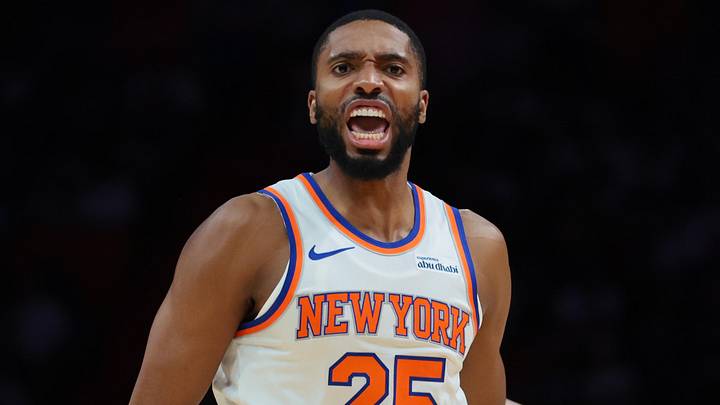
New York has reached the 2026 NBA Finals by playing through superstar point guard Jalen Brunson and offensive dynamo center Karl-Anthony Towns. Alongside that dynamic duo, however, is a trio of wings who can pass, dribble, shoot, and defend at a high level: OG Anunoby, Mikal Bridges, and Josh Hart.
All three players have made their mark this postseason, taking turns in prominent scoring roles while consistently defending, creating for others, and leading possessions with the ball in their hands.
Detroit, meanwhile, is desperately searching for players who can take pressure off of point guard Cade Cunningham on offense. Some have pushed for the Pistons to acquire a star-caliber wing who can check that box, but the front office must not be afraid to prioritize depth instead of star power.
In an era that has emphasized depth perhaps more than ever before, the Pistons must follow the Knicks' lead by loading the wings with high-level two-way players.
Pistons need wing depth, not just another big name
Detroit finished the 2026 NBA Playoffs with four players averaging at least 10.0 point per game. Unfortunately, only one of those four players, Jalen Duren at 10.2 points on 51.4 percent shooting, shot at least 45.0 percent from the field.
By comparison, the Knicks have five players averaging at least 10.0 points per game and four are shooting at least 45.0 percent from the field.
Furthermore, three different Knicks are averaging at least 17.0 points per game this postseason compared to two on the Pistons. The second after Cunningham, Tobias Harris, unfortunately shot at a clip of just .425/.292/.825.
Each of the Knicks' three players at or over 17.0 points per game, meanwhile, are shooting at least 47.6 percent from the field and 34.0 percent from beyond the arc.
That only scratches the surface of the value the Knicks have extracted from investing in the wings, as they've blitzed teams with taller defenders to win battles of physicality that many others simply can't. What the Pistons can learn, however, is the value in loading up on offensive options instead of relying on a select two players for everything—let alone one guard.
As the Pistons turn to the 2026 NBA Draft, free agency, and the trade market for avenues to improve, the Knicks' depth should show them exactly what they need to recreate.
 Add us as a preferred source on Google