

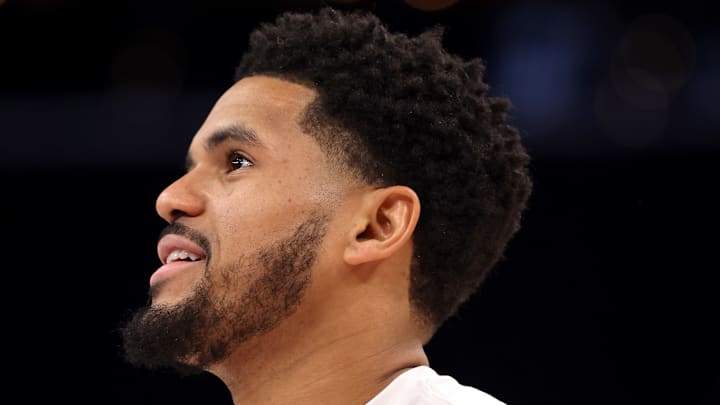
We are just over two weeks away from the NBA trade deadline, and no one knows what the Detroit Pistons will do, but that hasn’t stopped just about everyone from logging an idea.
There are those who believe the Pistons will do little or nothing, as they can compete now and want more information before they trade away any of their young players and those who think the Pistons will push in some chips to go for it while the Eastern Conference is wide open for the taking.
I tend to lean towards the first group, though we know things can materialize quickly in the NBA. The Pistons do have weaknesses to address and may be able to find the middle ground that allows them to pick up an impact player without giving up one of the young core.
Speculation has mostly focused on the player side, but there are ways the Pistons can work magic on the financial side that would set them up for next summer.
Creating a giant trade exception for the Detroit Pistons
Last offseason the Pistons orchestrated a sign-and-trade of Dennis Schroder to the Kings, a move that created a $14 million trade exception that they have at their disposal, an exception they could use this trade deadline to take on a player without sending out salaries.
In a recent article for The Athletic (subscription), John Hollinger laid out a plan for the Pistons to do it again with Tobias Harris, creating a $26.6 million trade exception in the process:
“This is unlikely, but I’ll throw it out here anyway: One possible nerdy cap shenanigan is to trade Harris and Paul Reed for two players, one who makes less than $14.3 million and the other who makes less than $10.8 million. The latter of the two could be offset by Reed’s outbound salary, and the former could be absorbed into the Pistons’ existing trade exception for Dennis Schröder as a result of his sign-and-trade to the Sacramento Kings. Thus, Detroit would generate a new exception worth $26.6 million for Harris it could carry into next offseason.”
I agree with Hollinger that it is unlikely, as the Pistons would be giving up too much front court depth in this trade unless they were getting big men back, which would be a tricky proposition to navigate given the salaries involved.
But the idea of creating another big trade exception in some way should be something the Pistons explore, especially if they aren’t aggressive at the trade deadline and wait until the offseason to make a big move.
One of the reasons the Pistons face challenges making a big trade is that they don’t currently have many big contracts to send out to match, which is why contracts like Tobias Harris’ become so valuable.
Trajan Langdon has done well to keep his veteran contracts short so that he’ll always have some he can pile into a big trade as expiring deals, but having another big trade exception would make that job even easier.
We’re getting into the nuts and bolts of cap work here, which isn’t exciting stuff, but the Pistons should be exploring all ways to use their contracts even if it isn’t in a blockbuster trade.
 Add us as a preferred source on Google